As we get older, keeping our homes safe, comfortable, and accessible becomes a top priority. Stairs and hallways are among the most frequently used areas of any house, but they are also where the majority of slips, trips, and falls occur.
The good news is that preventing falls doesn’t require a complete structural rebuild. With a few practical adjustments and the right home adaptations, you can significantly reduce fall risks and maintain independence in the home you love. Here are 7 simple, effective steps to safeguard your stairs and hallways.
1. Clear Away All Floor Hazards & Clutter
It sounds simple, but cluttered walkways are a leading cause of trips. Hallways and landings frequently end up as dumping grounds for shoes, coats, post, or laundry baskets.
- Remove loose rugs: Mats and rug edges are major trip hazards. Either remove them entirely or secure them firmly using heavy-duty double-sided rug tape or non-slip rubber underlays.
- Keep stairs clear: Ensure steps are kept completely free of objects – never leave items on the stairs intended to be carried up later.
- Tidy trailing cables: Secure loose wires along baseboards using cable clips or hide them behind furniture.
2. Upgrade Your Lighting
Poor lighting makes it difficult to judge step depth, spot stray objects, or navigate safely at night. Bright, well-lit spaces are essential for fall prevention.
- Increase bulb wattage: Switch out dim lightbulbs for bright, energy-efficient LED bulbs (aim for cool white tones to improve contrast).
- Install two-way switches: Ensure you can turn stair lights on and off from both the top and bottom of the staircase so you never navigate in the dark.
- Add motion-sensor night lights: Plug-in motion lights in hallways and landings provide automatic illumination during midnight trips to the bathroom.
3. Ensure Sturdy, Continuous Handrails
A loose or poorly positioned handrail offers false support when balance is compromised.
- Install dual handrails: If your staircase only has a rail on one side, consider installing a second rail on the opposite wall to offer double-sided stability.
- Check stability regularly: Ensure existing handrails are tightly secured to the wall and extend the full length of the staircase, from the top step all the way to the floor level.
- Use tactile ends: Handrails with distinct rounded ends alert visually impaired individuals that they have reached the top or bottom step.
4. Improve Step Visibility and Grip
Worn carpet or slippery wooden treads make stairs far more dangerous, especially when walking in socks or slippers.
- Apply non-slip stair treads or tape: If you have bare wooden, stone, or painted stairs, apply clear or high-contrast anti-slip grip strips to the edge of each tread.
- Add contrast striping: Highlighting step edges with a contrasting colour helps anyone with failing eyesight distinguish where one step ends and the next begins.
- Fix loose carpets: Ensure carpet on the stairs is tightly fitted without any sagging or loose edges.
5. Install Modern Home Mobility Aids
When navigating stairs becomes physically exhausting or unstable, relying solely on willpower increases fall risks dramatically. Installing dedicated mobility equipment restores total safety without requiring you to move house.
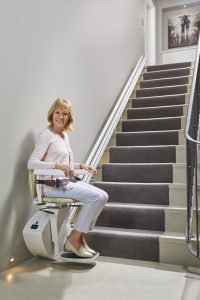
- Straight Stairlifts or Curved Stairlifts: A modern stairlift allows you to glide smoothly between floors while seated safely, removing the risk of a fall entirely.
- Through-Floor Home Lifts: Compact home lifts (like Stiltz or Wessex models) offer a stylish, space-saving alternative for moving between levels – ideal if you use a wheelchair or walking frame.
- Stair Climbers: Portable stair climbing devices provide temporary or flexible assistance for negotiating steps with a caregiver.
6. Keep Hallways Wide and Unobstructed
Narrow or crowded hallways restrict movement, making it easier to bump into furniture or lose your balance – especially when using walking aids like frames or sticks.
- Rearrange furniture: Move hall tables, coat stands, and decorative plant pots out of main walking pathways.
- Create turning space: Ensure doorways and hallway intersections have enough clear floor space to turn comfortably with a walking frame or wheelchair.
7. Wear Proper Footwear at Home
Fall prevention isn’t just about the environment – it’s also about what you wear on your feet.
- Avoid walking in socks or tights: Smooth footwear on wooden or carpeted stairs is a recipe for a slip.
- Ditch loose-fitting slippers: Slip-on, backless slippers offer no ankle support and slide off easily.
- Choose supportive footwear: Wear well-fitting shoes or slippers with sturdy rubber non-slip soles and closed backs indoors.
Summary Checklist for a Safe Home
| Area | Quick Action Required |
| Hallways | Remove loose rugs, tuck away cables, and clear furniture from walkways. |
| Stairs | Ensure zero clutter on steps, fix loose carpets, and check handrails. |
| Lighting | Add plug-in motion lights for nighttime visibility between bedrooms and bathrooms. |
| Mobility | Book a free home survey to explore stairlift or home lift installation options. |
Take the First Step Toward a Safer Home
Preventing falls is about taking proactive steps to protect your independence and keep living comfortably in your own home. If stairs are becoming a worry for you or a loved one, our team at Stairlifts & Mobility Solutions is here to help.
Contact us today on 08000 025065 to arrange a free, no-obligation home survey with one of our experienced mobility specialists across the Midlands and East Anglia.